
The Gartner Market Guide for Microsoft Product Support Services (7 September 2026, ID G00847357) showed that about 80% of inquiries from Gartner’s clients in 2025 regarding Microsoft’s Unified Support were due to dissatisfaction with quality, price, or both. Unified Enterprise is charged at a percentage of total Microsoft licensing spend, so the bill increases as licensing spend rises, regardless of how much support the organization actually uses. It is this kind of structure, more than any individual complaint, that is driving adoption of third-party support from the current level of about 15–20% of the market towards Gartner’s forecast of 25% by the end of 2028.
TrustedTech is also identified as a Representative Vendor in that report, listed among the fifteen providers in Table 2, along with CDW, IBM, Insight, SHI, and SoftwareOne. TrustedTech has obtained all six Microsoft Solutions Partner designations and was one of the first providers to receive Microsoft’s new Support Services Designation, a status based on a direct Microsoft audit of the support services provided, not on a claim made by the company itself.
“TrustedTech has been recognized by Gartner in this year’s Market Guide on Microsoft Product Support Services as one of the premier providers of Microsoft support in the world. This recognition as a ‘representative vendor’ is a testament to the entire team that is involved in delivering the very highest quality of Microsoft expertise to our customers. Being recognized by Gartner is a major step forward in our history, and promises to lift all boats from a product/service delivery perspective, not just limited to our capability set as an elite support provider.”
We are not approaching Gartner’s findings as a neutral third party. We are actively involved in this market daily. We have carried out this evaluation with clients moving off Unified Enterprise, and we therefore know which aspects of Gartner’s findings align with what is actually found in licensing audits and which remain theoretical for most buyers.
The post examines exactly what the Market Guide discovered, the factors driving cost pressure, and how to apply Gartner’s five-step evaluation framework alongside TrustedTech’s own 12-question renewal checklist when deciding between Unified Enterprise and a third-party alternative.
Why Unified Enterprise Costs Keep Climbing
The pricing information provided by Gartner is specific in that Unified Enterprise (which is the new name for the previous Unified Support) is charged as a percentage of the entire direct Microsoft licensing estate of an organization, the rate beginning at 7.5% for products in the user category and 10% for those in the Azure or server category. Since the charge is based on a percentage rather than a fixed amount, the bill automatically increases each time licensing expenditure rises, without Microsoft having to enter into separate negotiations.
Gartner points to four specific pressures pushing that number up year over year:
- Rising spend on Azure, Copilot, and M365 bundle upgrades (E3 to E5, E5 to E7)
- Shrinking discounts on Unified Enterprise itself
- The full elimination of Software Assurance 24x7 Problem Resolution Support benefits in February 2023, a benefit that used to offset support costs for high-spend customers
- True-ups and other large purchases, which spike the percentage-based fee in the year they happen
The pressure involved is not merely hypothetical. When Microsoft made its pricing changes on July 1, 2026, the costs for several of its core Microsoft 365 SKUs were increased by 5% to 33%. In the case of a support model based on a percentage of spending, this rise is automatically passed on to the support section of the bill, even if the organization’s actual level of support usage has not changed. Gartner’s report notes that some companies moving from the previous Premier Support model to Unified Support experienced cost increases of 200% or more, with budget shortfalls ranging from tens of thousands to hundreds of thousands of dollars. This is in line with what is observed in licensing audits, since the support item has become one of the biggest ongoing expenses on the Microsoft bill, apart from the license fees themselves, and is in agreement with the findings from TrustedTech’s own analysis of the July 2026 M365 price increases regarding organizations that were nearing renewal.
The Market Shift Gartner Is Tracking
Gartner believes that the number of medium and large Microsoft customers using third-party Microsoft support was between 5% and 10% in the years immediately following the launch of Unified Support in 2017; currently, that figure has increased to 15% to 20%, and Gartner’s assumption for its strategic planning is that it will reach 25% by the end of 2028. The volume of inquiries made to Gartner about Microsoft support has increased by 50% since 2017.
The report also explains why the majority of organizations that remain with Unified Enterprise do so because of discounts, credits, or projects still underway under the agreement, not because it is the lowest-cost option. Gartner believes that these organizations become more serious about looking at alternatives with each subsequent renewal as discounts decrease.
That tracks with a pattern we see constantly in EA renewal conversations: the first year on Unified feels manageable thanks to introductory credit. By the second or third renewal, the credit is gone, the percentage is applied to a larger licensing base, and the amount on the invoice no longer matches the budget.

Three Types of Third-Party Vendors, and Where TrustedTech Sits
Gartner splits the third-party market into three vendor types, and the distinction matters more than most buyers realize when evaluating an RFP:
Service providers sell support as their core business, often aiming to replace Unified Enterprise entirely rather than bolt on a single service.
Software resellers obtain support as an additional source of income alongside hardware and licensing, and Gartner has identified this as a structural tension, since resellers compete with their most important partner (Microsoft) for support revenue, and tickets are usually escalated to Microsoft rather than handled on-site.
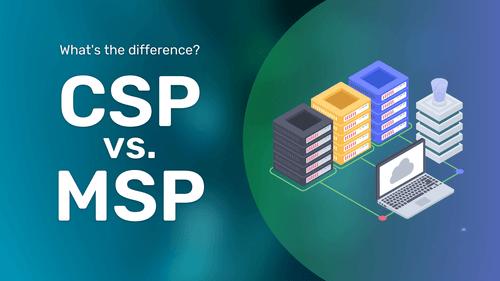
The Cloud Solution Provider partners must provide support for the products they sell through CSP, enabling them to apply the same support capabilities to the rest of the customer’s Microsoft environment.
According to TrustedTech’s own Table 2, we are classified as a service provider and reseller, with our headquarters in Irvine, California, the same category that Gartner assigns to CDW, Insight, and SHI. In reality, however, our approach is more in line with the CSP-partner-plus-dedicated-support-team end of the spectrum.

Support is not a separate business added on top of license sales; rather, it forms the core of what TrustedTech refers to as Certified Support Services (CSS), based on an internal two-dimensional model which includes reactive support that deals with incidents as they happen and proactive engineering that works to reduce the likelihood of such incidents over time. This same approach is the foundation of the Microsoft designation that TrustedTech has earned directly from Microsoft’s own audit process.
It is worth examining this distinction for any provider listed by Gartner, since the label of “service provider and reseller” in theory encompasses a wide variety of levels of commitment to support on a day-to-day basis, and one helpful indicator is whether or not the provider publishes its own operational figures or only makes general statements. For example, TrustedTech’s published CSS dataset shows a 5-minute average first-response time, an 85.7% in-house ticket resolution rate (for tickets that are closed without having to escalate to Microsoft), a 99.3% customer satisfaction score from post-case surveys, and a 100% onshore support engineering team with no outsourced call centers.

If it is actually necessary to escalate the matter to Microsoft, about 15% of CSS tickets follow the route via Premier Support for Partners (PSfP), which is the support system that Microsoft has for qualified partners and enables escalation to Microsoft engineering in cases where a third party is unable to resolve the issue on its own. This is the mechanism that Gartner’s report has in mind when it states that some third-party providers still have to escalate to Microsoft; PSfP makes this kind of escalation structured rather than improvised.
What Third-Party Support Actually Costs
Gartner’s Table 1 lays the pricing models side by side:
| Microsoft Unified Enterprise | Third-Party Support | |
|---|---|---|
| Pricing model | % of annual licensing spend (7.5%–10%) | Hourly, per seat, per product, or per server |
| Cost range | $50,000 minimum contract | $250–$700 per hour |
| Annual increases | 20%–50% year-over-year, tied to licensing growth | Rates can rise, but savings typically hold at 30%–60% vs. Microsoft |
Gartner’s own note on this point should be taken seriously, as many customers will not accept the risk of switching unless they can achieve savings of 50% or more. This represents a higher standard than the headline figure of “30-60% savings” implies, and it is a sensible one; since a support transition involves real operational risk, Gartner’s report is frank about the fact that external parties have to escalate matters to Microsoft when they are unable to resolve them themselves, at the result that the customer’s experience can be the same as, or only slightly better than, that of dealing directly with Microsoft.
That doesn’t provide grounds for rejecting third-party support; instead, it shows the need to be clear about what you are actually purchasing, such as hours that are allocated in the same way as with the earlier Premier model, or a seat or product-based system under which the vendor takes on the risk of heavy usage. Both of these options are available in the market; Gartner’s guide does not suggest one over the other, nor do we. The decision should be based on the volume of tickets, which is precisely what Gartner’s own Step 1 (listed below) is meant to identify.
Gartner’s Five-Step Evaluation Process, Applied
Gartner sets out a five-step method for assessing third-party support. The following explains what each of these steps really means when an IT or procurement manager is carrying out such an evaluation:
Step 1: Confirm that you actually need an annual contract at all. Calculate the number of incidents each year that require vendor-level support and the time it takes to resolve them without having such a contract. If your environment, in fact, produces a small number of support tickets, then an annual contract, whether from Microsoft or any other provider, might be the wrong kind of spending, regardless of the price.
In step 2, you need to decide whether Microsoft support is essential or can be substituted. Gartner makes it clear that certain Microsoft-exclusive services, such as Azure Rapid Response and Support for Mission-Critical, cannot be taken over by a third party since they involve direct escalation to Microsoft’s in-house product engineering teams. Companies in the financial services, healthcare, and government sectors tend to rely more on these services, and that is a genuine reason why organizations in the mission-critical sector remain on Unified Enterprise at a higher rate than the average market.
In step 3, send out requests for proposals that ask for detailed information. Gartner specifies that SLAs (including escalation SLAs), price lists tailored to your actual environment, and references from customers with support situations similar to yours should be provided, not generic case studies.
In step 4, you should carry out a proof of concept while your Microsoft contract is still in effect. By purchasing a small number of hours for comparison and running it alongside your existing Unified agreement, you eliminate the all-or-nothing risk associated with the decision.
In step 5, both sides should be negotiated simultaneously. Gartner’s view on this point is somewhat downplayed, but remains important, as Microsoft’s Unified Enterprise frequently includes services that a particular customer does not require. Professional Direct, which is available in limited quantities for M365 and Dynamics 365, is a lower-cost alternative that Gartner specifically recommends considering before concluding that Unified Enterprise is the only Microsoft-direct option.
TrustedTech’s 12-Question Microsoft Support Renewal Checklist
The five steps set out how you should carry out the evaluation; they do not indicate the specific questions you should ask the provider, and this is where most RFPs fall down, since a proposal can appear complete in writing and yet still fail to answer the actual operational questions. TrustedTech has prepared the following checklist based on client renewal evaluations, and it is intended to be applied to your present provider, before you agree to anything:
- What proportion of the advisory hours were used up during the previous contract term?
- What was the average time taken to respond to critical tickets over the last 12 months?
- What was the average interval between the escalation of a ticket and Microsoft getting involved?
- In the event of a Severity A incident, does the customer or the partner own Microsoft communications?
- What was the number of tickets resolved internally, that is, without Microsoft getting involved?
- What proactive engineering work was carried out in the previous term, and has it been taken on?
- What happens to the pricing model if Microsoft licensing or Azure consumption increases?
- Are response times given as committed SLAs or as target times?
- What proportion of the support staff have Microsoft certifications and are based onshore?
- What is the named-engineer continuity for our environment?
- What will the support relationship be with Microsoft’s forthcoming initiatives (Copilot, Entra, Defender, Sentinel)?
- What actual customer satisfaction data is there throughout the provider’s customer base, not just data that has been selected for particular reasons?
The only opportunity during the renewal process to reset your cost baseline for the next few years is when you’re considering the alternative options; after the contract has been signed, you have to adhere to that pricing structure even if your licensing expenditure changes. The complete framework for this checklist, together with a four-level maturity scale for assessing the current support relationship, can be found on the TrustedTech page at Mission Critical Microsoft Support.

Where This Plays Out in Practice
The following examples illustrate the different ways this type of evaluation works, depending on what an organization is really aiming to optimize.
The transition at the Nordic Investment Bank, a European banking organization with over 500 users and operating on a Microsoft-first basis from EA to CSP via TrustedTech, resulted in annual licensing savings of 15% to 20%, reduced support response time from one to two days to just minutes, and secured three-year pricing protection. The full case study details the actual steps taken in that transition.
Edwardian Hotels London, a hospitality business with more than 10,000 employees that operates around the clock in a 24/7, guest-facing setting, had previously used a support system that involved several layers of escalation before critical problems got to the appropriate technical resources; the internal IT team usually had to handle the coordination of communications and keep track of the escalation progress when there were major incidents. Following its move to TrustedTech’s Certified Support Services, the company achieved an average initial response time of five minutes and achieved about 85% resolution of tickets handled in-house, along with Microsoft 365 licensing optimization that correctly sized the E3 and E5 licenses without any downtime during implementation. The full case study has the details.
Under its previous support agreement, TaylorMade Golf had access to Microsoft’s expertise, but the relationship remained largely advisory, offering recommendations without the hands-on implementation or active planning required to turn them into measurable results. As TaylorMade stated, “Microsoft Unified Support was not providing the anticipatory value that we wanted.” By switching to TrustedTech’s Certified Support Services model while retaining access to Microsoft through Premier Support for Partners, the company obtained proactive engineering involvement, detailed modernization planning, and standard support. The full case study deals with the transition.
In each of the three cases, abandoning Unified Support does not involve losing access to Microsoft; instead, it means combining Microsoft escalation access obtained via PSfP with a support approach in which response times and resolution ownership are genuinely measured rather than merely assumed.
What the Market Guide Doesn’t Settle
Gartner makes it clear that there is no proven record showing that third parties provide support that is objectively better than Microsoft’s; therefore, the reason for switching relates to cost, flexibility, and how escalation issues are managed, not to a promise of higher quality. The report also refers to the 2025 IT Key Metrics data indicating that software, SaaS, and cloud solutions account for 36% of overall software spending, with 17% of the 2025 application spending being allocated to external services and 43% of that amount going on support alone, a fact which illustrates the total amount of the budget actually involved in this decision, in addition to the Unified Enterprise entry.
It is also important that a service provider is willing to have themselves measured. Rather than asking a potential client to accept the provider’s responsiveness and quality on faith, TrustedTech makes its operational dataset available to organizations on request as part of any support evaluation, including details of the measurement periods and sample sizes.
If you are in the middle of your renewal period and would like a second look at your Unified Enterprise figures in relation to Gartner’s benchmarks, or if you want to find out where an EA-to-CSP transition might end up for your particular licensing arrangement, TrustedTech’s team can go through the real figures based on the agreement you have currently.

Frequently Asked Questions
What replaced Microsoft Premier Support?
Microsoft discontinued Premier Support in 2017 and substituted it with Unified Support, which was subsequently rebranded as Unified Enterprise. The main difference lies in the way it is priced: Premier Support was based on hours, whereas Unified Support is charged as a percentage of the organization’s total Microsoft licensing expenditure.
How much does Microsoft Unified Enterprise cost?
According to Gartner’s 2026 Market Guide, Unified Enterprise begins at 7.5% of licensing spend for products in the user category and at 10% for those in Azure or the server category, with a minimum contract value of $50,000 and typical annual increases of between 20% and 50% that are linked to licensing growth.
Can a third-party provider fully replace Microsoft Unified Enterprise?
Yes, for most routine support activities. Gartner points out that certain services, such as Azure Rapid Response and Support for Mission-Critical, require escalation directly to Microsoft product engineering and cannot be performed by a third party; as a result, companies with strict uptime requirements often maintain at least a basic Microsoft agreement. When escalation is necessary, it typically goes through Premier Support for Partners (PSfP), Microsoft’s support structure for qualified partners.
What savings can I expect from switching to third-party Microsoft support?
Gartner reports typical savings of between 30% and 60% when compared to direct Microsoft support, although the report mentions that many organizations will not take on the risk of switching unless the expected savings are around the 50% mark.
Is TrustedTech named in the Gartner Market Guide for Microsoft Product Support Services?
Yes, it is. TrustedTech appears in Table 2 of Gartner’s 7 September 2026 Market Guide (ID G00847357) as a Representative Vendor, with its head office in Irvine, California, and has all six Microsoft Solutions Partner designations as well as the Microsoft Support Services Designation.
What’s the difference between a CSP partner and a software reseller for Microsoft support?
Gartner makes the distinction between the two: software resellers often compete with Microsoft, their largest partner, for support revenue, which can cause support tickets to be directed towards Microsoft escalation rather than being resolved internally. CSP partners are required to provide support for the products they sell as part of the CSP program, which gives their support capabilities a different positioning.
The Bottom Line
The assumption that Gartner makes in its own strategic planning is that the proportion of third-party Microsoft support will increase from the current level of about 15% to 20%–25% by the end of 2028; this is a real but slow change, not a sudden shift away from Microsoft. The companies making the fastest progress are those that apply Gartner’s own five-step process, along with a specific checklist such as the one mentioned above, to their renewal figures, rather than responding to a single poor support ticket.
If you wish to compare the math with the terms of your own Microsoft agreement, then arrange a no-obligation consultation with TrustedTech’s licensing advisors, during which we will go over the Unified Enterprise or Unified Support costs you currently have against the costs that a CSP-based support model would have in your particular environment.

The 2026 Gartner Market Guide for Microsoft Product Support Services
Get the experts’ opinion on which vendors are best equipped to deliver Microsoft Product Support. (Hint: We’re included.)
Get the Guide
Gartner’s Market Guide for Microsoft Product Support Services, 7 September 2026, ID G00847357, prepared by Adam DeJoy, Michael Silver, Samantha Ruiz, Domenico Scriva, Aadil Nanji, Yoann Bianic, Sara Gravesande, Edward Szarkowicz, and Lance Pate. Gartner does not endorse any vendor, product, or service that is depicted in its research publications and cautions technology users against selecting only those vendors that have the highest ratings or other designations. The opinions expressed in Gartner research publications represent those of Gartner’s research organization and must not be regarded as facts. Gartner disclaims all warranties, either expressed or implied, concerning this research, including any warranties as to merchantability or suitability for a particular purpose.