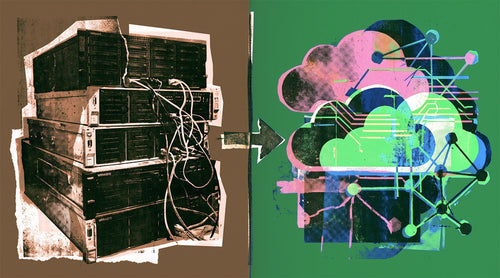


Most organizations that moved to Azure over the past five years did it reactively. The workforce went remote, the timeline compressed, and cloud became something you deployed fast rather than something you designed well. The result is what TrustedTech’s Azure team runs into constantly: environments that are technically “in the cloud” but still running on the same architectural assumptions as an on-premises data center from 2018.
Azure Frontier is Microsoft’s answer to that gap. It is not a new product you purchase or a feature set you toggle on. It is a framework for the next stage of cloud maturity, one where your data, AI capabilities, architecture, and governance model all work together instead of pulling in separate directions. TrustedTech hosted a full webinar on the Frontier, led by Lance Waidzunas (Manager of Azure Services and Solutions), Chad Seymour (Fulfillment Engineer), and Mitch Jones (Account Manager), drawing on years of hands-on Azure implementation work. This post covers the four pillars they walked through and what each one means for your environment right now.
Pillar 1: AI-Native Infrastructure
The most common mistake TrustedTech sees with AI adoption is building it on top of infrastructure that was never designed to support it. Organizations spend months standing up Copilot pilots or Azure OpenAI integrations, then wonder why performance is inconsistent, costs spiral, or the outputs can’t be trusted. The problem is almost never the AI tool. It’s the foundation it’s sitting on. This is also why teams evaluating advanced enterprise models such as claude opus 4.8 should first assess whether their cloud architecture, data pipelines, and governance controls are ready to support reliable agentic workflows.
AI workloads behave differently from traditional cloud workloads. Traditional environments were sized for predictable, scheduled batch jobs. AI is bursty, data-hungry, and constantly evolving. You can’t drop it onto infrastructure built for static capacity and expect it to behave.
What AI-native infrastructure actually needs is elastic compute that scales on demand, unified data pipelines that feed models in real time, and infrastructure that can adapt without manual reconfiguration every time requirements shift. The organizations moving fastest are the ones that build this in from the start, not the ones retrofitting it after a pilot stalls.
There is also a practical framing issue worth noting: many organizations are creating problems for AI to solve rather than using AI to solve the problems they already have. The Frontier framework pushes back on this. AI-native infrastructure is defined by value generation. The work only makes sense if there is a measurable return, whether that is reduced infrastructure spend, faster decision-making, or automation of genuinely high-cost manual work.
TrustedTech’s Azure architects start here by assessing an organization’s current compute posture and identifying where workloads need to be restructured before any AI layer is introduced. The organizations that skip this step tend to rebuild it 12 to 18 months later, at significantly higher cost and under more pressure. Waiting does not make the work cheaper. It makes it more disruptive.
If your Azure environment was built primarily between 2020 and 2022, it is worth reviewing your Azure cloud migration strategy before committing additional spend on AI workloads.
Pillar 2: Unified Data Platform
Your data is the one thing your competitors cannot copy. Every organization running Azure has been accumulating it for years, across on-premises servers, Azure subscriptions, third-party SaaS tools, and in some cases AWS or GCP. The problem is that the data is fragmented. It lives in silos, it is duplicated across systems, and it is largely inaccessible to the AI tools that could make use of it.
Chad Seymour described this as a three-layer problem during the webinar. The base layer is raw data in SQL databases, applications, and legacy systems. Valuable in theory, not yet useful in practice, because it is siloed and unorganized for analysis. The second layer is the unified data platform, where you aggregate that data into a single source and do the engineering work to make it AI-ready. The third layer is the intelligence layer, where Azure AI Foundry, Azure OpenAI Search, and retrieval-augmented generation (RAG) pipelines let you turn that prepared data into insights and automated actions.
Microsoft Fabric is the primary vehicle for layer two. It consolidates Azure Data Factory, Azure Synapse Analytics, and Power BI into a single service. Before deploying it, though, it is worth understanding how the licensing works, because this trips up a lot of teams. Fabric is not included by default in any Microsoft 365 plan, including E5. It is an Azure service, provisioned through the Azure portal rather than the Microsoft 365 Admin Center. A trial is available at app.powerbi.com. Paid capacity is provisioned by searching “Fabric” in the Azure portal and selecting the appropriate SKU. Once capacity is allocated, the workspace is accessed through the same Power BI interface teams are already using.
For organizations that have already invested in Power BI Pro or Premium Per User, the move to Fabric is more of a natural progression than a rearchitecting effort. Data engineering, data warehousing, real-time analytics, and AI tooling through Copilot for Fabric are all consolidated into one environment, with shared governance through Microsoft Purview. If your organization has already adopted Purview for compliance, Fabric plugs directly into those existing policies.
The Fabric Data Agent, which reached general availability recently, closes a common bottleneck: instead of waiting for a developer to build an ad hoc report, you can point the agent at a semantic model and retrieve analytics through a natural language query. This is not a roadmap item. It is available today and eliminates the queue-based reporting workflow that slows decision-making in most mid-market and enterprise environments.
A practical scenario: a 500-seat organization with data spread across on-premises SQL Server, SharePoint, and a third-party CRM has limited ability to use any of it for AI purposes until it is unified. Once consolidated through Fabric with proper data engineering applied, the same data becomes the input for automated reporting, anomaly detection, and Copilot-powered analysis. The infrastructure investment is roughly the same. What changes is whether the data is organized enough to be useful.
Pillar 3: Architecture for AI-Driven Environments
Being cloud-enabled and being AI-driven are not the same thing. The gap between them is wider than most organizations realize until they actually try to close it.
A pattern TrustedTech encounters regularly is what Lance Waidzunas calls the “lift and shift with a cloud address.” The organization moved workloads to Azure, but the underlying architecture is still the same on-premises design, now running on Azure Virtual Machines instead of physical hardware. That architecture will fight AI at every step. Real-time processing is no longer a premium capability reserved for large enterprises. Whether it is a Copilot summarizing a document, a fraud detection system flagging a transaction in milliseconds, or a supply chain tool adjusting to disruption as it happens, the expectation across every business function is that insights arrive now, not overnight in a batch report. If your data pipelines cannot support that, you are already behind.
The architectural shift Azure Frontier calls for has four practical components. First, elastic compute through IaaS and PaaS services rather than fixed-capacity VMs. Second, reduced data movement: every time data crosses an ingress or egress boundary it carries a cost, in both dollars and latency, so the architecture should minimize unnecessary movement. Third, unified data pipelines that feed AI models continuously rather than on a schedule. Fourth, governance and security designed into the architecture from the start, not bolted on after workloads are running.
Every month an organization waits to modernize its architecture, the replatforming cost grows. Organizations investing now in AI-ready foundations will build a real advantage. The ones that wait will face a larger, more expensive rebuild later, usually under more time pressure than they have now.
TrustedTech’s Azure architects work through this during the data modernization assessment, mapping the current environment, identifying gaps against an AI-ready baseline, and building a phased roadmap. On average, clients who go through this process find 20 to 30 percent of their Azure spend was not delivering captured value, typically through right-sizing, orphaned resource cleanup, and reservation optimization. The Beyond Azure Advisor post covers the methodology in more detail, including the specific patterns Lance and the Azure team look for during an assessment.
Pillar 4: Multicloud Security and Governance
The governance conversation is the one most organizations wish they had started earlier.
Multicloud sprawl is real and largely unintentional. Most organizations did not set out to run workloads across Azure, AWS, and on-premises simultaneously with separate monitoring stacks, separate security tools, and separate identity configurations. It happened through rapid growth, departmental purchasing decisions, and the organic expansion of cloud use across business units over several years. Mitch Jones put it plainly in the webinar: one client discovered they were spending over 40 percent more than necessary because they had redundant services running across two providers that could have been consolidated. That is not a rounding error. It is real budget that should be funding AI initiatives, infrastructure improvements, or headcount.
The compliance dimension makes this more serious than a cost problem. Organizations running fragmented multicloud environments often discover governance blind spots they did not know existed, until an audit surfaces them. Policies designed for a single Azure environment do not automatically extend to workloads running in AWS or to resources brought in through acquisitions. In regulated industries, the consequences can include failed audits, compliance violations, and legal exposure.
The Frontier framework addresses this through three tools working together. Azure Arc extends Azure management and governance to resources running outside Azure, whether on-premises, in AWS, or in GCP. Azure Policy enforces configuration rules across all of those resources regardless of where they live. Microsoft Entra ID provides unified identity, typically built on Active Directory that has been synced to the cloud over time, now serving as the central identity plane across the entire environment.
The security posture Azure Frontier calls for is proactive rather than reactive. Security needs to be part of the architecture from day one, not a layer added after workloads are deployed. This matters especially for AI environments, where the risk of sensitive data reaching an uncontrolled LLM or an over-permissioned agent is real. Copilot with Defender and the broader Microsoft Security stack should be configured alongside human oversight, not positioned as a replacement for it.
TrustedTech holds all six Microsoft Solutions Partner Designations, including Security and Data & AI, which means its team works across security architecture, governance frameworks, and AI readiness within a single engagement rather than handing clients off to separate vendors. For organizations building out or auditing their security posture, the Azure security guide covers the defense-in-depth model and the specific controls that matter most in practice.
What the Funding Picture Looks Like Right Now
Microsoft has structured a meaningful set of incentives for organizations beginning Frontier-aligned work. These are time-limited and worth understanding before planning a data or AI initiative.
The Azure Accelerate Assessment plus Proof of Value provides up to $50,000 in funding. The Azure Frontier Offer delivers a 2-to-1 ROI structure with up to $500,000 in funding for Microsoft Foundry, Fabric, and database deployment. An Azure Credit Offer provides up to $500,000 in Azure credits to offset Fabric costs for six months. The Cloud Accelerate Factory provides a zero-cost jumpstart for Azure products. Eligible organizations can access up to $550,000 in combined value. The minimum Azure spend to qualify is $1.00, so these programs are not reserved for large enterprise deployments. TrustedTech, as a preferred Microsoft CSP, facilitates access to these programs as part of its data modernization engagements.
TrustedTech’s data modernization assessment is normally priced at $2,500. For organizations that go on to do any follow-up migration or advisory work, that cost is zeroed out. The assessment covers current architecture, gaps and blockers, Fabric fit, and where AI can be applied to add measurable value. It is designed to prevent organizations from committing to modernization work before they know what the foundation actually looks like.
The numbers from Microsoft support the investment case. 75 percent of technology leaders agree that migrating to Azure reduces barriers to AI at scale. Organizations see 50 percent faster time to market for AI applications built on Azure. For every dollar invested in generative AI, the average return is 3.7 times. Layer X, a company dealing with document overload and manual reporting bottlenecks, built an AI workforce on Azure and saved 570 work hours through automated document review while lowering infrastructure costs through serverless scaling.
How to Get Started: Assess, Align, Activate, Build
TrustedTech’s Azure team uses a four-step framework for clients beginning Frontier work. The first step is deliberately unglamorous.
Assess means getting a clear picture of the current environment before changing anything: architecture, cost posture, cloud maturity, inefficiencies, and gaps. The output is a data-backed starting point, not a guess.
Align means connecting the cloud roadmap to the business outcomes the organization actually needs. Too many cloud strategies live in a silo, disconnected from the AI initiatives, data strategy, and business goals they are supposed to support.
Activate means going after the high-impact optimizations first: right-sizing, eliminating idle resources, turning on automation. These are not multi-quarter projects. They are changes that can be made in weeks, and they fund the larger transformation ahead.
Build is the long game: FinOps discipline, governance frameworks, AI-ready architecture, and a partner relationship that keeps the environment current as the platform evolves. Organizations that do this well treat cloud as a capability that gets better over time, not a migration project with a completion date.
Frequently Asked Questions
What is Azure Frontier?Azure Frontier is Microsoft’s framework for the next stage of cloud maturity. It is not a single product but a structured approach that combines AI-native infrastructure, a unified data platform (primarily Microsoft Fabric), modern architecture for AI workloads, and multicloud security and governance. Organizations at the Frontier stage are AI-driven rather than simply cloud-enabled.
How is Microsoft Fabric licensed and purchased?Microsoft Fabric is not included by default in any Microsoft 365 plan, including E5. It is an Azure service, provisioned through the Azure portal rather than the Microsoft 365 Admin Center. You can start a trial by visiting app.powerbi.com, and paid capacity is purchased by searching “Fabric” in the Azure portal and selecting the appropriate SKU. Once provisioned, the workspace is accessed through the standard Power BI interface.
What is the difference between being cloud-enabled and being AI-driven?Cloud-enabled organizations have migrated workloads to Azure but often retain on-premises architectural patterns, static capacity planning, and batch-based data processing. AI-driven organizations have built elastic compute, unified data pipelines, real-time processing capabilities, and governance frameworks that let AI function reliably at scale. The gap between the two is primarily an architectural one, not a tooling one.
What Microsoft funding is available for Azure Frontier work?Microsoft currently offers up to $550,000 in combined value: up to $50,000 through the Azure Accelerate Assessment plus Proof of Value, up to $500,000 through the Azure Frontier Offer for Foundry, Fabric, and database deployment, and up to $500,000 in Azure credits to offset Fabric costs for six months. The minimum Azure spend to qualify is $1.00. TrustedTech, as a preferred Microsoft CSP, facilitates access to these programs. Funding availability and terms are subject to change; verify current eligibility with your TrustedTech account team.
How does Azure Arc fit into multicloud governance?Azure Arc extends Azure management and governance to resources running outside Azure, including on-premises servers, AWS workloads, and GCP resources. Combined with Azure Policy for configuration enforcement and Microsoft Entra ID for unified identity, Arc provides a single governance plane across a hybrid or multicloud environment. This removes the need for separate monitoring and policy tools across providers, which is where much of the cost and compliance exposure in fragmented environments comes from.
Taking the Next Step
Azure Frontier is not a destination. It is a way of thinking about cloud maturity when AI is a core part of the stack rather than a pilot project sitting alongside it. The organizations moving fastest started with an honest assessment of where their architecture and data actually stand, then built toward AI readiness in deliberate phases.
TrustedTech’s data modernization assessment is the practical starting point for most clients: a structured evaluation of current architecture, gaps against AI-readiness benchmarks, Fabric fit, and where Microsoft’s funding incentives apply to the planned work. It is customized per client, not a generic checklist.
If your Azure environment has grown organically over the past several years and you are not confident it is positioned for AI workloads, that is the conversation to start. Talk to TrustedTech’s Azure team about a data modernization assessment and find out where the gaps are before committing to the next phase of investment.
Azure Frontier content sourced from TrustedTech’s Azure Frontier webinar, hosted by Lance Waidzunas (Manager of Azure Services and Solutions), Chad Seymour (Fulfillment Engineer), and Mitch Jones (Account Manager). Microsoft funding figures and availability are subject to change; verify current eligibility and terms with your TrustedTech account team.